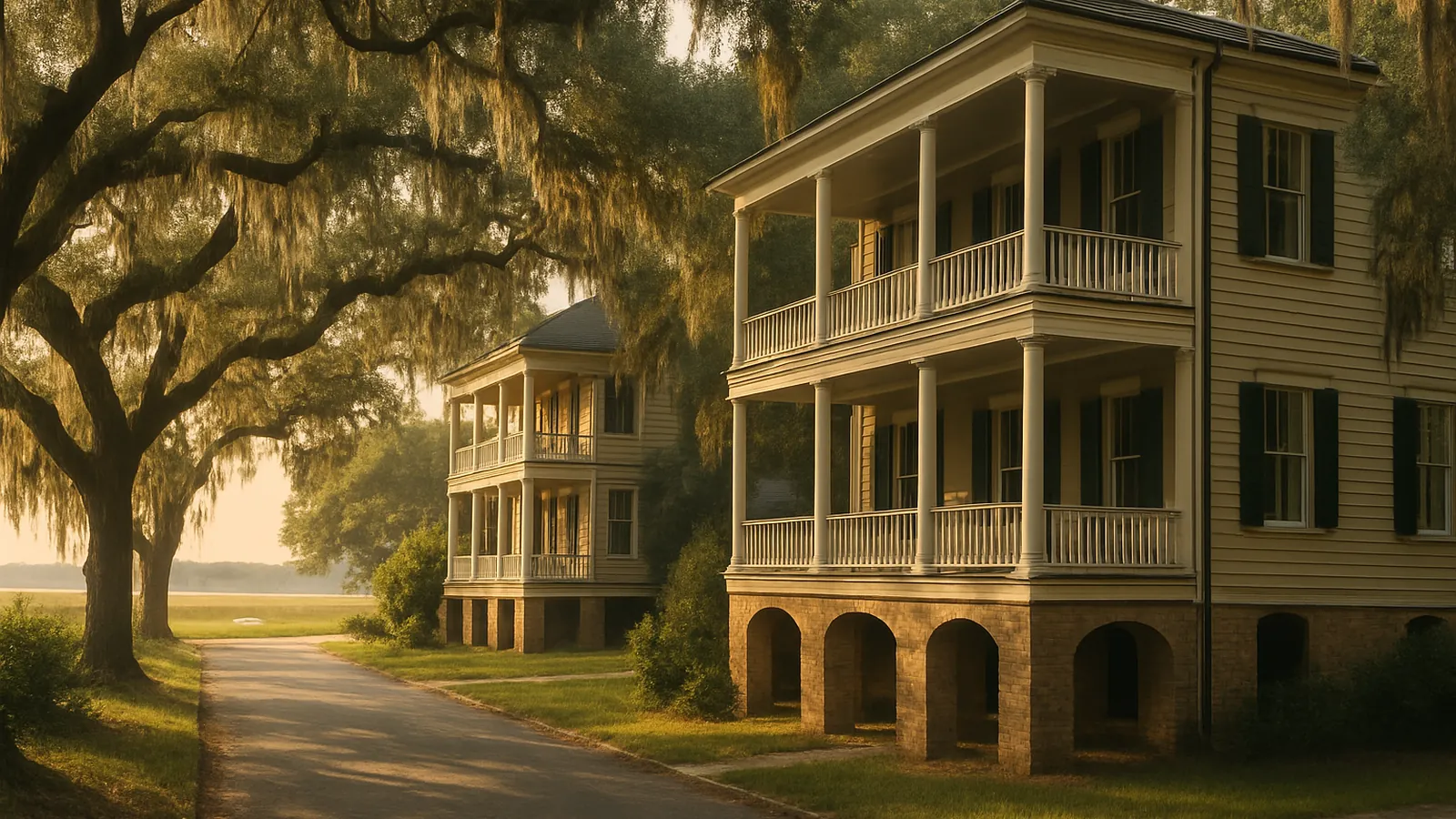
Mold removal in Charleston costs $500–$6,000 for most residential remediation, with crawl space remediation and encapsulation running $4,000–$12,000. Vented crawl spaces under raised Lowcountry homes pull humid outdoor air onto cool framing, where it condenses — the market's dominant mold mechanism.
Below: why the crawl space is usually the answer, what the signals look like from inside the house, and what proper remediation involves.
The problem is under your feet
Most mold advice assumes a leak or a damp basement. The Lowcountry has neither in most houses — it has raised construction over a vented crawl space, and that assembly behaves badly in this climate for a reason worth understanding.
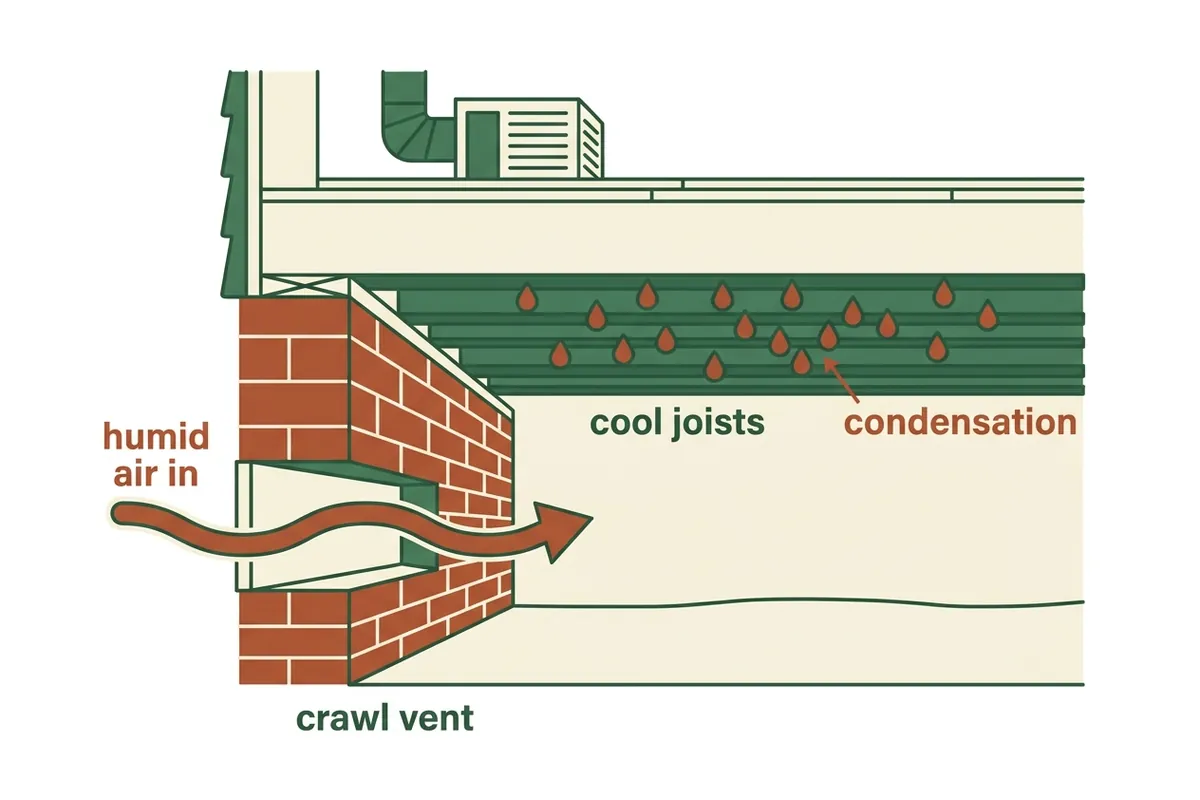
Crawl space venting was designed on the assumption that outdoor air is drier than the air under your house, so exchanging them dries things out. Through a Charleston summer that assumption fails completely. Outdoor dew points sit high from late spring into fall, so the air coming through those vents is loaded with moisture. It meets floor joists, subflooring, and ductwork that your air conditioning has cooled from above — and it condenses on them, exactly the way a cold glass sweats on a porch.
The result is liquid water forming on wood, several months a year, in a place nobody looks. The vents aren't relieving the problem. They're supplying it.
What that looks like from inside the house
- A musty smell strongest near the floor, or that arrives when the HVAC kicks on
- Hardwood cupping or buckling — the underside taking on more moisture than the top
- Floors that feel cool and slightly damp in summer, or soft spots near exterior walls
- High indoor humidity that the air conditioning never seems to bring down
- Condensation on ductwork or insulation falling away from the floor above
- Visible growth on joists or subfloor, once someone actually goes down there
That last one matters: a great many Charleston homeowners have never been under their own house, and a lot of inspections never go down either. Ours does — a mold inspection here that skips the crawl space has skipped the diagnosis.
The services that fix it, and what each costs
| What you have | What's driving it | The work | Typical range |
|---|---|---|---|
| Musty smell near the floor, cupping hardwood, growth on joists | Humid air condensing in a vented crawl space | Crawl remediation and encapsulation | $4,000–$12,000 |
| Visible growth on walls, ceilings, or trim | Indoor humidity or a specific water source | Containment and HEPA remediation | $500–$6,000 |
| Odor with nothing visible anywhere | Growth in a cavity, under flooring, or below | Inspection and testing | Free–$900 |
| Musty air from vents, condensation on ducts | Cool ductwork running through humid space | AC and duct cleanup | $600–$3,500 |
| Tidal or storm water intrusion, plumbing failure | Bulk water on a 24-to-48-hour clock | Extraction and metered drying | $1,000–$8,000 |
Encapsulation: what it is and when it's warranted
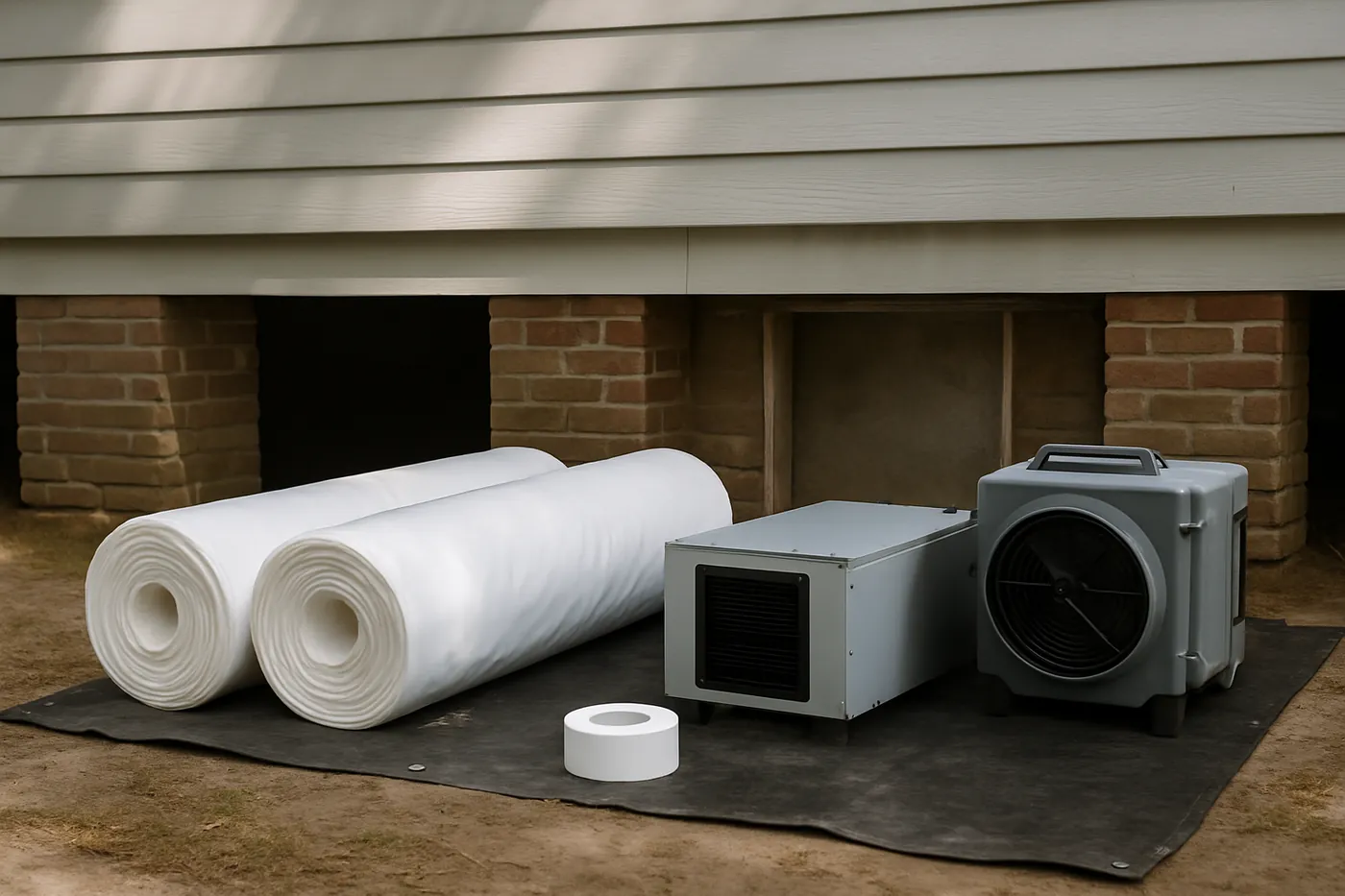
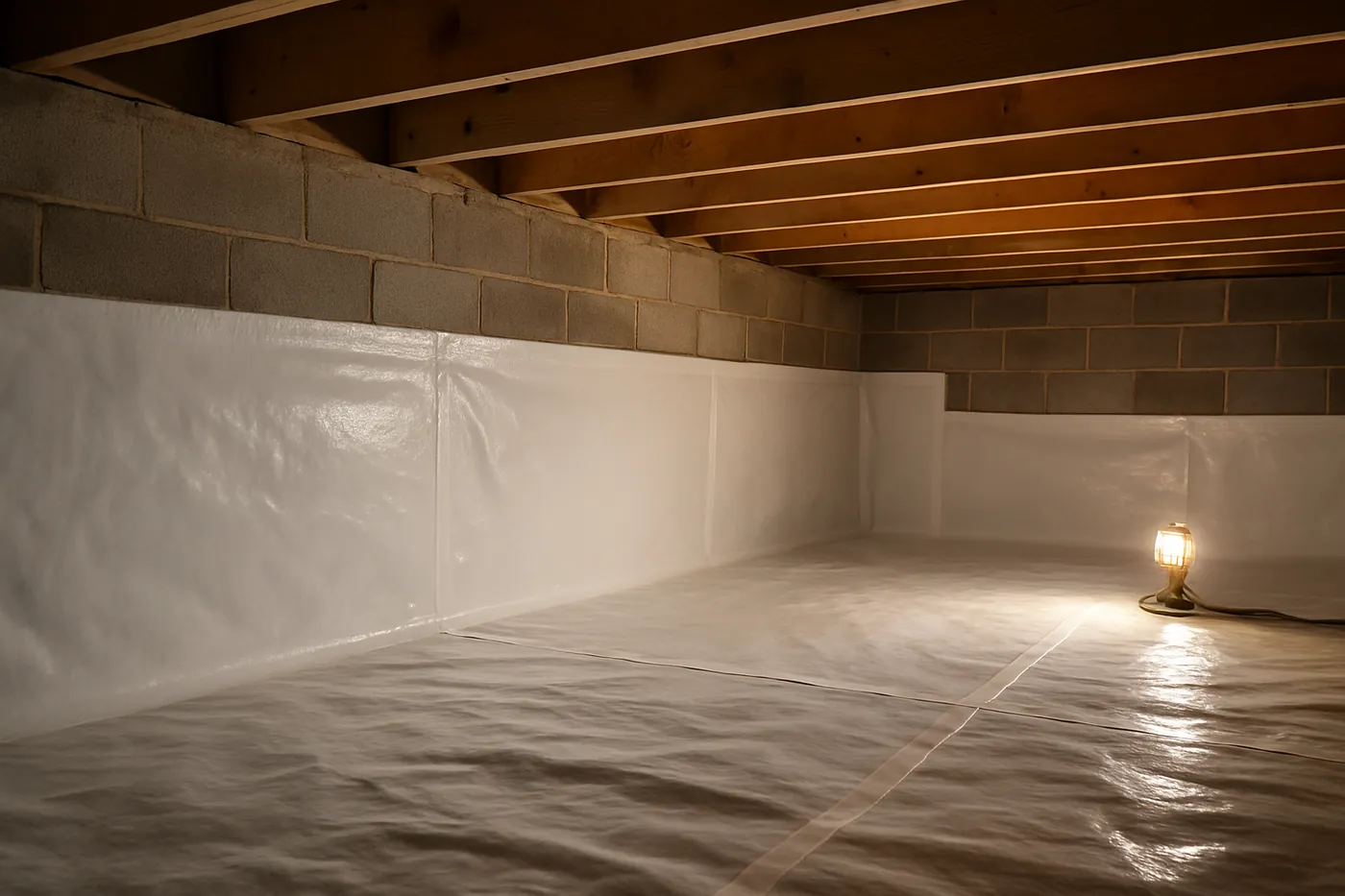
If venting is the problem, sealing is the answer. Encapsulation closes the crawl space off from both the ground and the outside air: a heavy vapor barrier across the soil and up the foundation walls, vents sealed, rim joists air-sealed, and a dedicated dehumidifier controlling the humidity that remains. The space becomes part of the building's conditioned envelope instead of a humid basement you can't stand up in.
It works in this climate for exactly the reason venting doesn't: it stops importing moisture rather than trying to exhaust it. It is also not automatic. A crawl with standing water needs drainage before it needs a liner, and a crawl that reads dry may only need a vapor barrier and better grading outside. The moisture readings decide, and we'd rather tell you that than sell the largest version.
Historic houses need a different hand
Charleston's older housing — the peninsula in particular — was built long before air conditioning existed, out of assemblies that managed moisture by staying permeable. Plaster on masonry, wood that breathes, no vapor barriers anywhere. Then air conditioning arrived and changed the temperature and vapor gradients those walls were built around.
That means modern moisture solutions can genuinely harm a historic assembly. Sealing a wall that was designed to dry in both directions can trap moisture inside masonry and accelerate decay. On older properties we scope conservatively, prioritize source control and ventilation over sealing interior surfaces, and say plainly when something belongs with a preservation specialist rather than a remediation crew.
South Carolina doesn't license this trade — so vet harder
Worth knowing before you hire anyone: South Carolina does not issue a mold-specific contractor license. States like Florida license mold assessors and remediators separately and restrict one firm from doing both on a project. Here, no such structure exists, which means the consumer protection has to come from your own diligence.
Three questions do most of the work. Verify general contractor licensing through SC LLR. Ask what independent certification the technicians actually hold and from whom. And ask to see the moisture readings behind the recommended scope — anyone who can't produce them is quoting, not diagnosing. Ask us the same three. We'd rather you did.
How the inspection works
We go under the house. Moisture content readings on joists and subfloor, relative humidity in the crawl and inside the house, vapor barrier condition and ground moisture, insulation and duct condition, and standing water or drainage problems. Then indoors: readings at wall bases, the air handler, and an exterior walk for grading and downspout discharge. You get a written scope naming the moisture source, the work, the price per line, and the timeline — free, and yours to take anywhere.
Three questions get their own deep pages: what black mold actually is and how Lowcountry removal works, how attic sheathing streaks map an airflow failure, and what insurance covers — including the sublimit and tidal-flood lines every Charleston policy draws.
Mold questions Charleston homeowners ask
How much does mold removal cost in Charleston?
Most residential remediation runs $500 to $6,000, and crawl space work is the common exception — remediation with encapsulation and a dehumidifier typically lands $4,000 to $12,000 depending on square footage and condition. What sets your number is how far growth spread and whether the moisture source is being corrected. The inspection is free. Our Mold removal cost breakdown for Charleston shows what drives each figure, line by line.
Why does the crawl space matter so much here?
Because a vented crawl space in this climate does the opposite of what it was designed to do. Venting assumes outdoor air is drier than the space beneath your house. Through a Lowcountry summer it isn't — humid air comes in, hits framing and ductwork that the air conditioning has cooled, and condenses. The vents are feeding the problem.
Our floors are cupping. Is that related?
Very often, and it's one of the most reliable signals we get. Hardwood cups when the underside takes on more moisture than the top, which usually means humid air sitting in the crawl space beneath it. Refinishing the floor without fixing what's underneath means refinishing it again.
What is encapsulation and do I need it?
Encapsulation seals the crawl space off from the ground and outside air: a heavy vapor barrier across the soil and up the walls, vents sealed, and a dehumidifier controlling what remains. In this climate it works far better than venting because it stops importing humid air rather than trying to exhaust it. Not every house needs it, and the readings tell us which.
Does South Carolina license mold companies?
No — the state doesn't issue a mold-specific contractor license the way some states do, which puts more of the vetting on you. Check general contractor licensing through SC LLR, ask what independent certification the technicians hold, and ask for the moisture readings behind the scope. Those three questions do most of the filtering.
Do I need testing before removal?
Often not. EPA guidance is that visible mold with a known water source generally doesn't require testing first, since the remediation is the same regardless of species. Testing earns its cost when there's odor with no locatable source, a health question needing documentation, a real estate transaction, or verification that a completed job worked.
Is black mold more dangerous?
Color doesn't identify a species and species doesn't change the response. Any significant indoor growth is handled the same way: find and stop the moisture, contain the area, remove what can't be cleaned, HEPA-filter the air. Companies that price by how alarming a color sounds are selling fear rather than remediation.
Will insurance cover it?
Cause decides it. Sudden accidental water — a burst supply line, a failed water heater — is frequently covered. Gradual humidity, crawl space condensation, and maintenance issues are typically excluded, and tidal or storm flooding falls under separate flood coverage. We document cause, timeline, and readings in the format adjusters work from.
Mold removal across the Charleston area
Mount Pleasant · North Charleston · Summerville · Goose Creek · James Island · Johns Island · Daniel Island · Isle of Palms · Folly Beach · all service areas
Get a free Charleston mold inspection
Tell us what you’re seeing or smelling — a musty smell coming up through the floor, cupping hardwood, condensation on ductwork, staining on a wall — and we’ll schedule an inspection that includes going under the house. We reply the same business day.