
Most mold removal in Charleston is not covered by homeowners insurance, because policies exclude mold from long-term moisture, which is exactly what the Lowcountry produces. Coverage is mostly limited to sudden covered water events, often under a mold sublimit, and mold after a flood is an NFIP matter. Work that is excluded runs $500–$6,000.
The exclusion, the sublimit, the flood line, and the clock that decides claims.
The mold exclusion, plainly
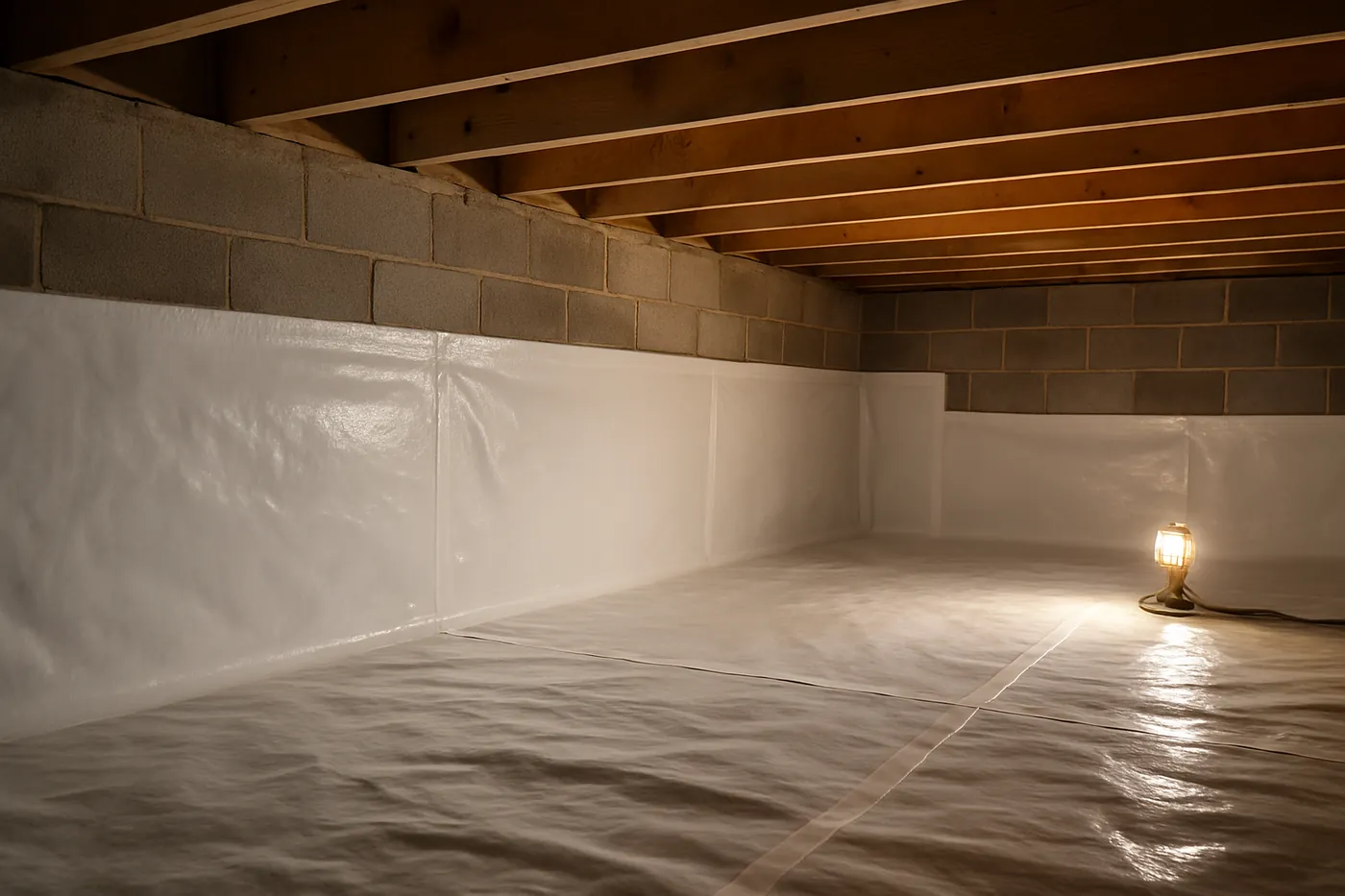
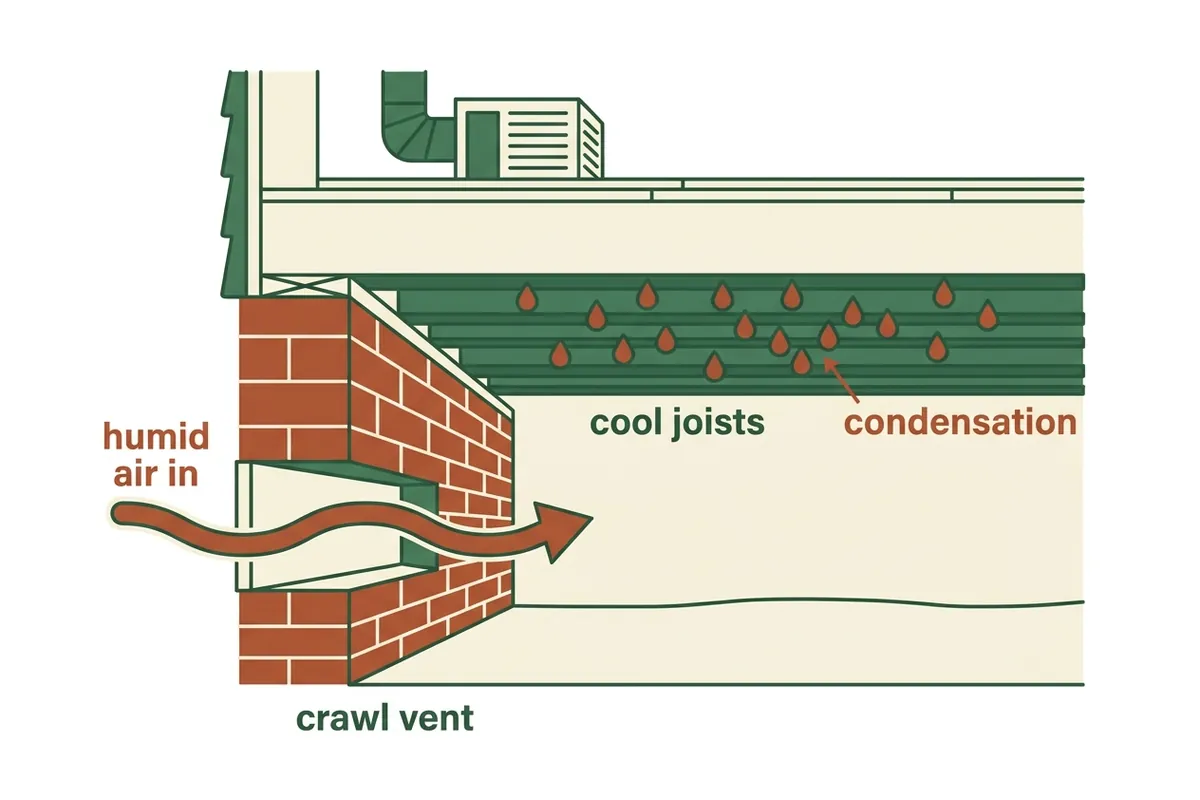
Homeowners policies treat mold from ongoing moisture as a maintenance result, not a covered peril: humidity, condensation, slow leaks and vented-crawl damp are all excluded causes, and that list covers most of what grows in this climate, from crawl space colonies to sheathing streaks to the closet corners of a muggy August. The exception is mold that comes directly from a sudden covered water event: a burst supply line, a failed water heater, a roof opened by a storm. Sudden and accidental are the words that matter, and the policy’s own text governs.
The sublimit inside the exception
Even covered mold often meets a ceiling: many policies cap mold remediation (commonly somewhere in the $1,000–$10,000 band) separately from the water damage that caused it. The practical Charleston consequence: after a covered leak, fast drying doesn’t just satisfy your mitigation duty, it keeps the mold portion of the loss inside a number the sublimit can actually pay. Check your declarations page for the mold limitation endorsement today; it is the single most consequential fine print in a humid-climate policy.
Covered or excluded: the usual verdicts
| What happened | Usual outcome |
|---|---|
| Humidity, condensation, or crawl-damp mold | Excluded: long-term moisture |
| Mold after a burst pipe, dried and documented fast | Commonly covered: subject to the sublimit |
| Mold from a slow leak found months later | Usually excluded, not sudden |
| Mold after tidal or surge flooding | Homeowners: excluded. NFIP flood policy question |
| Mold behind long-deferred repairs | Excluded: maintenance |
The flood line Charleston keeps crossing
Surface and tidal water is excluded from homeowners policies entirely: mold after a king tide or storm surge is a flood policy question, and NFIP’s own mold language generally requires that growth couldn’t reasonably have been prevented after the event. For peninsula and marsh-adjacent addresses, that makes two documents worth reading before the next storm season: the homeowners mold sublimit and the flood policy’s post-event duties. Rapid dry-out serves both, and serves the house most of all.
Build the file, beat the clock
- Photograph the event same-day: the failed line, the water line, dates visible.
- Start drying immediately and keep receipts: mitigation is your policy duty and your evidence.
- Get the plumber’s written diagnosis naming the failure sudden.
- Document the growth before removal: photos and, where a dispute looms, testing at $300–$900.
When the answer is no (the common case) the cost guide prices every scope publicly, and a per-line estimate means the moisture fix and active removal can proceed now with cosmetics staged later.
If the denial letter comes back
A denial is the carrier's opening position, not the last word. Ask in writing for the exact policy wording it relied on, then argue about the cause rather than about the mold: mold on its own is nearly always excluded, while mold that follows a covered sudden discharge often is not. What moves a mold claim is a dated record: when the leak began, when you found it, and what you did that same day, supported by dated photos, the plumber’s invoice and the moisture readings. If the carrier stops responding, the South Carolina Department of Insurance accepts consumer complaints. Also find the suit-limitation clause in your policy: on mold claims, that deadline often settles the dispute before the merits ever do.
Insurance questions, straight answers
Does homeowners insurance cover mold removal in South Carolina?
Usually not by itself. Policies broadly exclude mold caused by long-term moisture (humidity, condensation, slow leaks, deferred upkeep), which covers most Lowcountry mold. Coverage generally applies only when the mold comes directly from a sudden covered water event, and even then often under a mold sublimit. The exclusions and limits sections of your policy hold the wording that decides it.
What's a mold sublimit and why does it matter?
A cap inside the coverage. Many policies that do cover event-driven mold cap that mold portion (commonly somewhere between $1,000 and $10,000) regardless of your overall dwelling limit. A covered burst-pipe claim can pay fully for water damage while the mold line hits its ceiling early. Knowing your sublimit before a claim shapes how fast you act after a leak.
Is mold after tidal or storm flooding covered?
That's the Charleston line: flood is excluded from homeowners policies entirely, so mold following tidal or surge water is an NFIP flood-policy question, and NFIP coverage has its own mold rules, generally covering it only where you couldn't reasonably have prevented growth after the flood. Peninsula and low-lying homeowners should know both policies' mold language before the next king tide.
Why does speed matter so much on a mold claim?
Because 'sudden event' claims rot into 'neglect' denials on a timer. Mold establishes on wet materials within days, and adjusters distinguish an owner who dried and documented promptly from one who discovered the problem a month later. Photograph the event, start drying, keep receipts: mitigation is both your duty under the policy and your best evidence.
What does mold removal cost when insurance says no?
What it costs anyone: most home remediation runs $500-$6,000 depending on spread, whole-crawl jobs $4,000-$12,000, and testing $300-$900. A written scope priced per line lets you phase it: fix the moisture and remove active growth now, leave cosmetic finishes for later. Most mold work in the Lowcountry is paid out of pocket, which is why every figure on this site is published.
Get a Charleston mold inspection
Tell us what you’re seeing or smelling: a musty smell coming up through the floor, cupping hardwood, condensation on ductwork, staining on a wall, and we'll pass your request to one independent local specialist, who can set up an inspection. A specialist who serves the Charleston area will call you back.