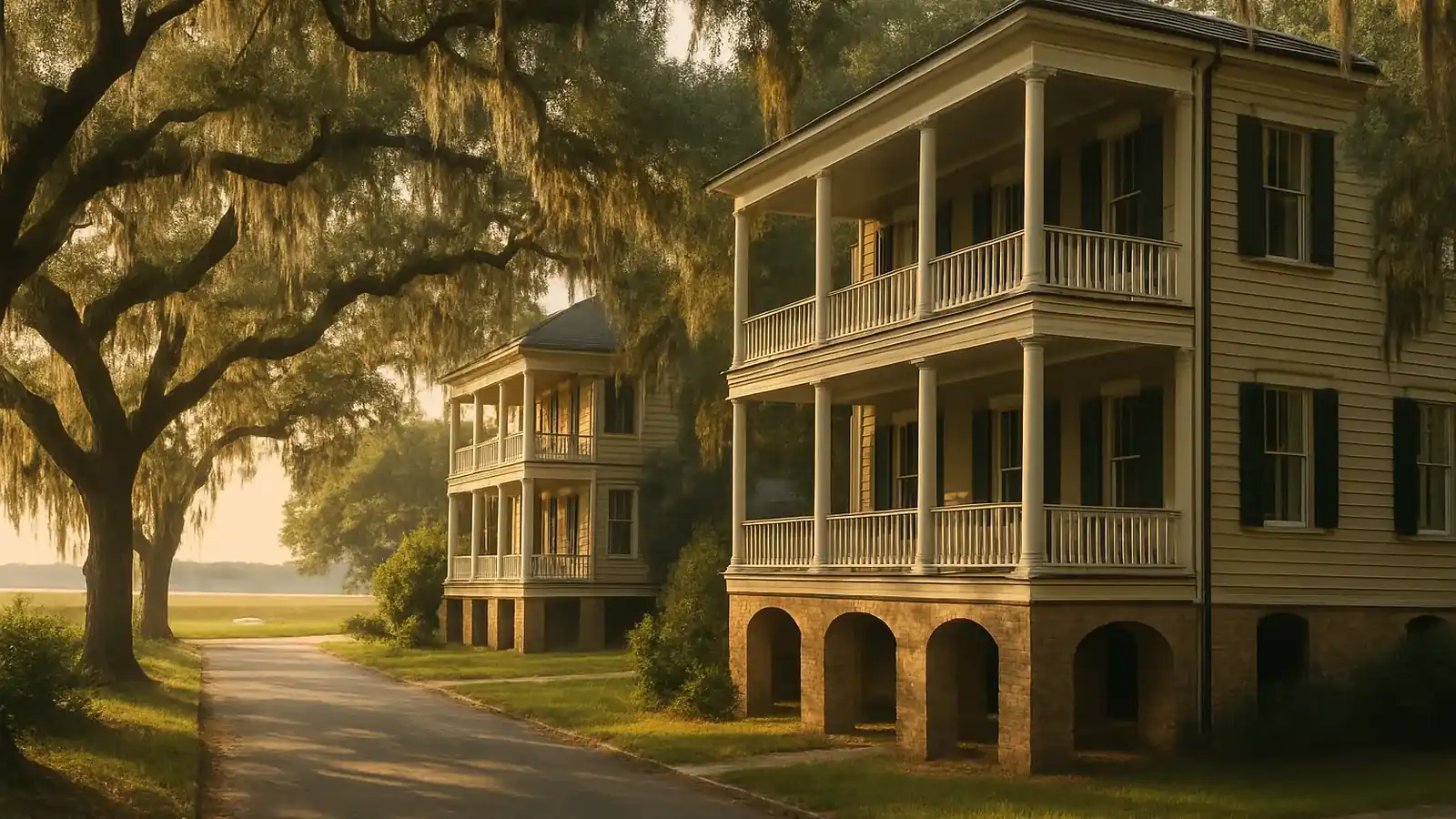
Black mold removal in Charleston runs $500–$6,000 for most homes, with contained single-room jobs at $2,000–$6,000 and whole-crawl work up to $4,000–$12,000. How it is removed depends on how far it has spread and where the water comes from, not on species; Lowcountry humidity, vented crawl spaces and tidal water are what feed it.
What the color means, why this climate grows it, and the removal that actually holds.
What “black mold” is, and what the color doesn’t tell you
The phrase usually means Stachybotrys chartarum, a truly dark, slow-growing mold that likes cellulose kept wet for a long time, such as drywall paper and soaked wood. But plenty of common molds grow dark too, and color changes with the surface and the colony’s age. EPA remediation guidance turns on how much is growing and why it is wet, not on species: substantial indoor growth is removed and its water source is fixed, whatever the lab calls it. Species testing does have uses (medical questions, legal disputes, clearance), and our inspection and testing page explains when it is worth its $300–$900. In Charleston, what a dark color tells you reliably is simpler: something has stayed wet for some time.
Why the Lowcountry grows it so well
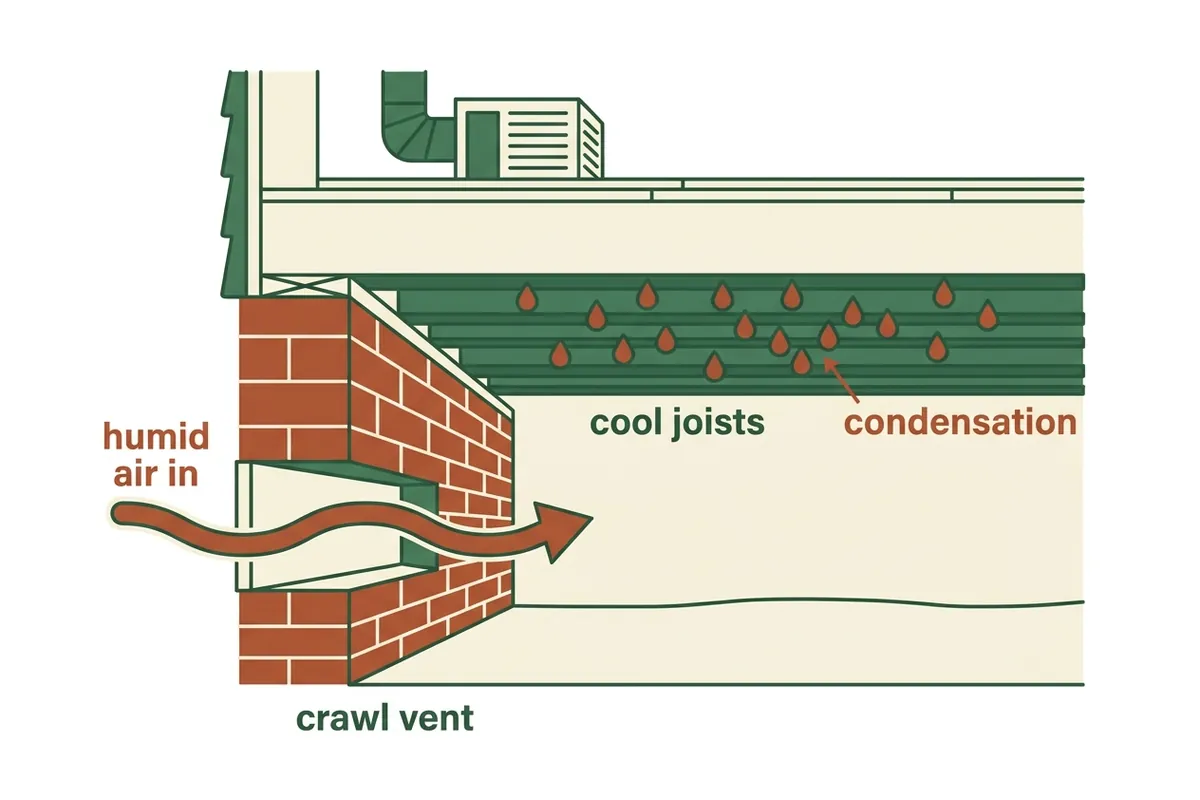
Charleston stacks every driver. Fifty inches of rain and long humid summers keep outdoor air loaded; vented crawl spaces pull that air under raised houses, where it condenses on cool framing: the region’s signature colony site; air conditioning cools without dehumidifying, so closed-up rooms stay damp; and tidal and storm water finds the peninsula’s low spots on its own schedule. Dark growth on a joist under a Wagener Terrace single or behind baseboards in a West Ashley ranch isn’t exotic: it’s the local climate doing what it does wherever moisture management lapses.
Cleanup or remediation: the honest line
| Situation | Reasonable response | Typical cost |
|---|---|---|
| Small patch on hard, non-porous surface | Household cleanup, then watch it | Supplies |
| Growth on drywall, wood, or fabric | Material removal: porous roots regrow through cleaners | $500–$2,000 small scope |
| A room, a wall system, an AC air path | Contained remediation, HEPA, negative air | $2,000–$6,000 |
| Crawl space colonization | Whole-crawl remediation + moisture correction | $4,000–$12,000 |
| After tidal or storm water | Dry-out first, then assess | Scoped after drying |
Removal that holds in this climate
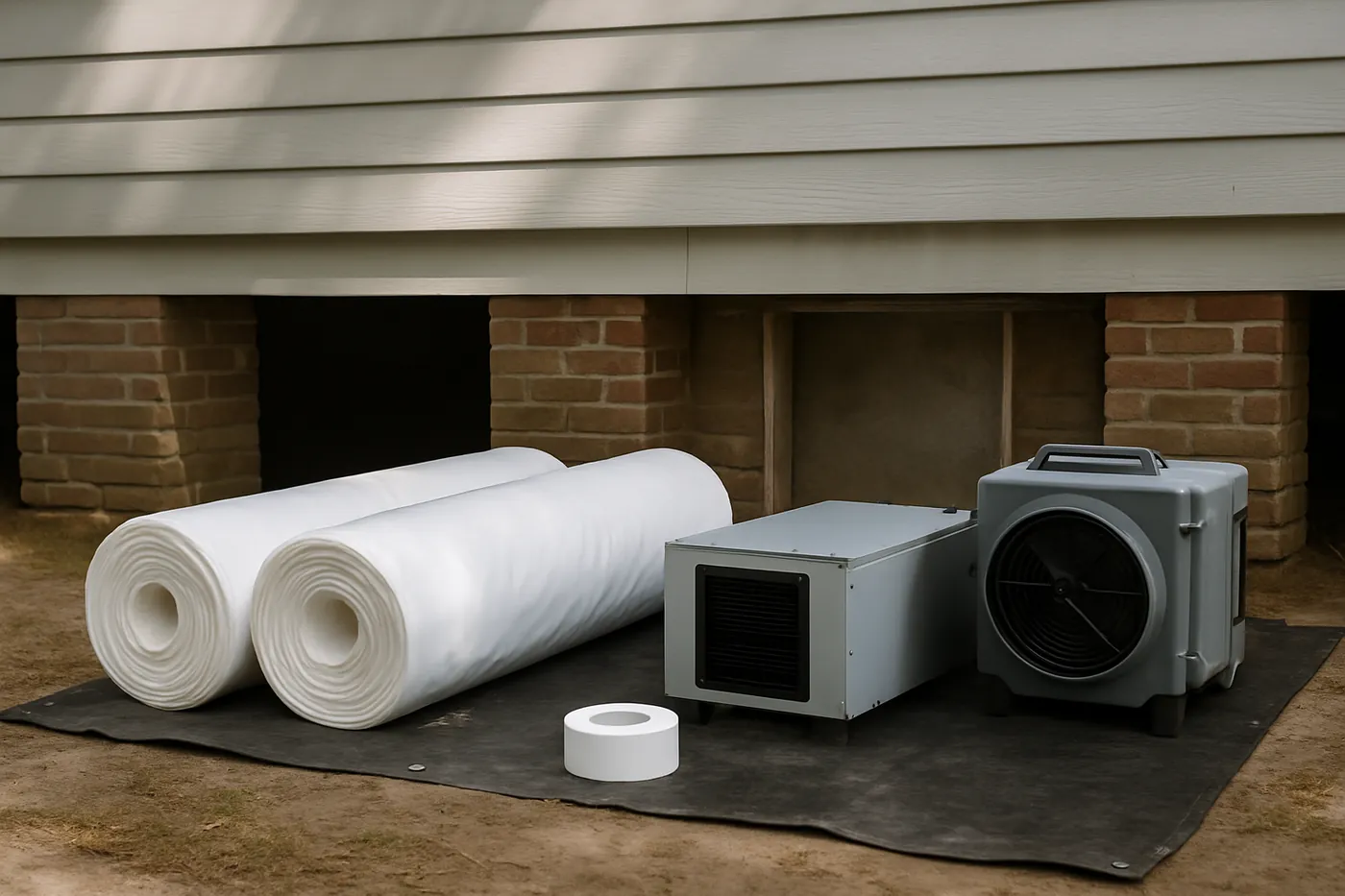
The sequence is containment before disturbance (plastic and negative air so the work doesn’t seed the rest of the house) then removal of colonized porous material, HEPA-vac and damp-wipe of structural surfaces, and drying. Then the half that makes it permanent here: the moisture fix. A crawl colony without crawl-humidity work returns; an AC-path colony without system cleanup and condensate correction returns; storm-wetted framing that never fully dried returns. South Carolina issues no mold-specific contractor license, so judge every bid, including the local specialist's, by whether it names the moisture source and the verification step, not by the license frame on the wall. The cost guide prices every scope line by line.
What clearance testing actually proves
Visible growth being gone is not the finish line; the finish line is an independent test showing the air in the worked area matches a part of the house that was never affected. Clearance checks three things: the area is visibly clean and dry, the containment did its job, and indoor airborne spore counts sit at or below an outdoor sample taken the same day. That outdoor sample is what most people overlook. Spores are part of ordinary outdoor air in the Lowcountry, so “zero” is not a real standard, and a company that promises it is overselling. Have the sampling done by someone who is not doing the removal, and file the report: it is what a buyer, an adjuster or a landlord will ask for later.
Black mold questions, straight answers
Is black mold really more dangerous than other molds?
Color does not decide how dangerous it is. 'Black mold' usually means Stachybotrys, but many common molds grow dark, and under EPA guidance the response follows the extent of growth and the moisture source, not the species. Any substantial indoor growth calls for removal and a moisture fix; a species test only matters if a doctor or a dispute needs the name.
Why does Charleston grow so much of it?
The Lowcountry is a mold habitat with houses in it. Fifty inches of rain, long humid summers, vented crawl spaces condensing humid air under the floor, AC that cools without drying, and tidal water in the low spots: every driver on the checklist. Dark growth here is common enough that the useful question isn't whether it's 'black mold' but where the water came from.
Can I just bleach it?
On a small, hard, non-porous surface (a shower corner) household cleanup is reasonable. On drywall, wood, or anything porous, bleach wets the material, kills surface growth, and leaves roots in a dampened substrate: the regrowth cycle. Growth beyond a few square feet, in a crawl space, or recurring after cleaning is a containment-and-removal job, not a spray bottle.
What does removal actually involve here?
Containment with negative air so spores don't spread during work, HEPA filtration, removal of colonized porous materials, cleaning of structural surfaces, and (the Lowcountry half) fixing the moisture that fed it: crawl ventilation, AC humidity, or intruding water. Skipping the moisture fix is renting the removal. Clearance verification comes after, not on the same invoice as promises.
What does black mold removal cost in Charleston?
Most residential remediation runs $500 to $6,000 by spread: contained single-room work commonly $2,000-$6,000, whole-crawl-space jobs $4,000-$12,000. Species doesn't change the price: extent and access do. South Carolina issues no mold-specific license, so weigh every bid's process against EPA guidance, including the specialist's; testing, where wanted, runs $300-$900.
Get a Charleston mold inspection
Tell us what you’re seeing or smelling: a musty smell coming up through the floor, cupping hardwood, condensation on ductwork, staining on a wall, and we'll pass your request to one independent local specialist, who can set up an inspection. A specialist who serves the Charleston area will call you back.