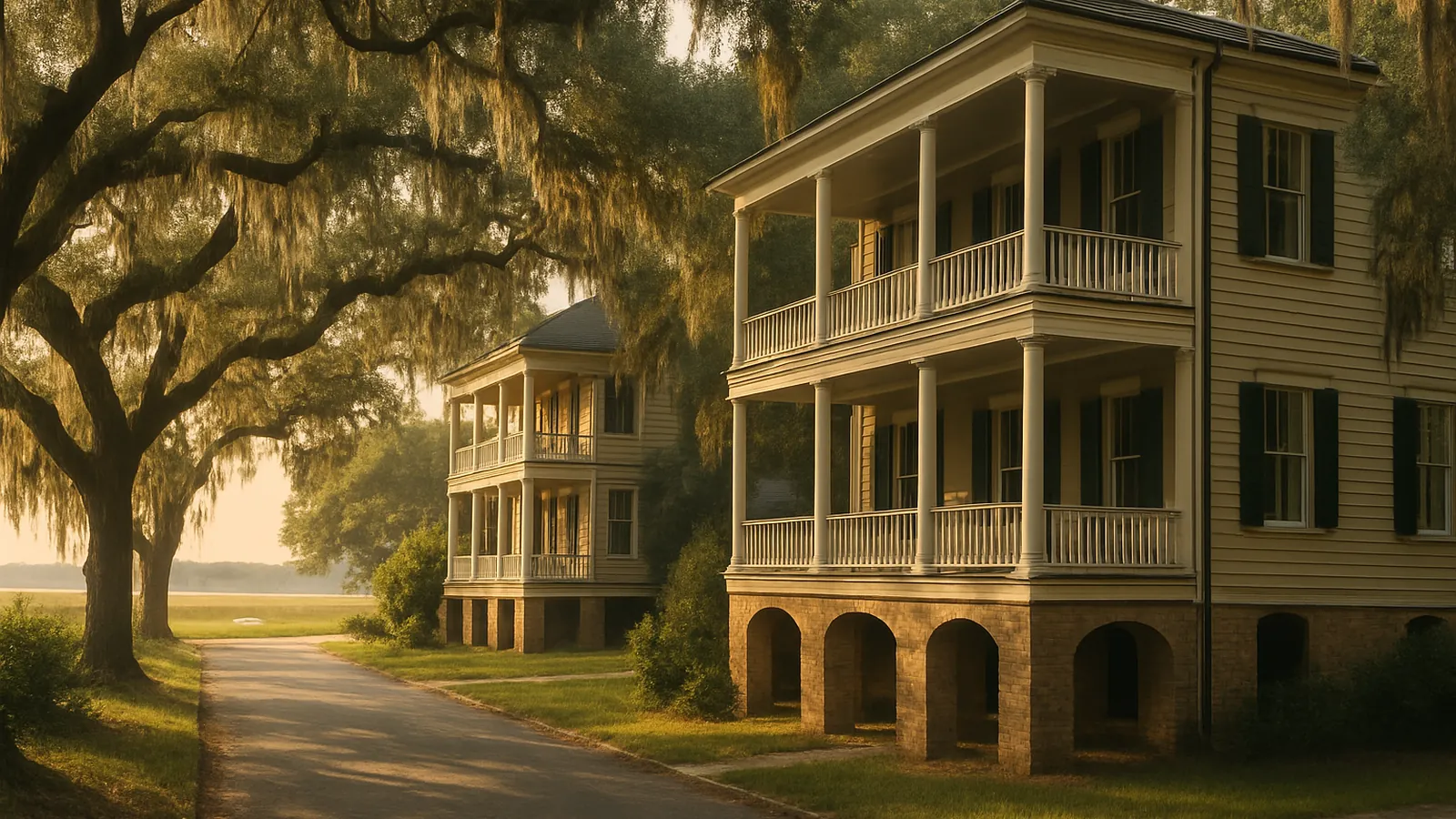
Most Charleston mould problems trace to one mechanism: a vented crawl space pulling humid marine air under a house, where it condenses. The answers below cover that, tidal water intrusion, and what historic assemblies change about the work.
How do I know if I have a problem?
A smell that comes back after cleaning, allergies that ease when you leave the house, a patch that keeps returning on the same wall — these are the signs people describe most often, and they usually point at moisture rather than at the growth itself.
How do I know if I have a real mold problem?
Four signals worth acting on here: visible growth, a musty smell strongest near the floor, hardwood that has started cupping, and indoor relative humidity holding above about 60 percent. The cupping floor is the one people most often misread — it's usually the crawl space telling you something.
Why is mold so common in Charleston?
Because vented crawl spaces do the opposite of their intended job in this climate. Venting assumes outdoor air is drier than the space under the house; through a Lowcountry summer it isn't. Humid air comes in, meets framing your air conditioning has cooled from above, and condenses into liquid water on wood.
Do I need a lab test before remediation?
Often not. EPA guidance is that visible mold with a known water source generally doesn't require testing, since the remediation is the same regardless of species. Testing earns its cost for odor with no locatable source, a health question, a real estate transaction, or post-remediation verification.
Will insurance cover it?
Cause decides. Sudden accidental water is frequently covered. Gradual humidity and crawl space condensation are typically excluded — which unfortunately describes most Lowcountry mold — and tidal or storm flooding falls under separate flood coverage. We document cause, timeline, and readings whichever way it goes.
What does mold removal cost in Charleston, and why do quotes differ?
What removal costs depends on the affected area, and what keeps it gone depends on correcting the moisture — which is why we price the pair.
What does mold removal cost?
Most residential remediation above the floor runs $500 to $6,000. Crawl space remediation runs $2,000 to $6,000, and $4,000 to $12,000 with encapsulation and a dehumidifier. Drainage, where needed, is priced separately. The cost guide breaks down every range and what moves it.
What happens if I go ahead?
What the work involves, how long you need to be out, and what verification looks like afterwards.
Should I add crawl space vents or a fan?
Generally no, and it's the most common bad advice in this market. Venting supplies the moisture rather than removing it, and a fan pulling humid summer air across cool framing increases condensation. Sealing and dehumidifying is what works here — the opposite of the instinct.
Does South Carolina license mold companies?
South Carolina doesn't license mold companies. The state issues no mold-specific contractor license, unlike states such as Florida that license assessors and remediators separately. That puts the vetting on you: verify general contractor licensing through SC LLR, ask what independent certification technicians hold, and ask to see the moisture readings behind any scope.
How do I keep it from coming back?
Control the crawl space and the rest follows. A sealed, dehumidified crawl holding humidity in the 50s stops the mechanism at its source, and indoor humidity generally comes down with it. Above the floor, the target is the same: under about 60 percent relative humidity, year-round.
Still deciding?
The cost guide explains every range in detail, and our services covers each job type. When you're ready, the free inspection puts numbers on your specific house.
Get a free Charleston mold inspection
Tell us what you’re seeing or smelling — a musty smell coming up through the floor, cupping hardwood, condensation on ductwork, staining on a wall — and we’ll schedule an inspection that includes going under the house. We reply the same business day.